
How to Play the Aviator Game in India
Aviator is a crash game built around one timed decision: leave the round before the plane flies away. The multiplier starts low and keeps rising while the round is active. Before takeoff, a stake is placed. During the round, cash out locks the payout if it happens before the crash point.
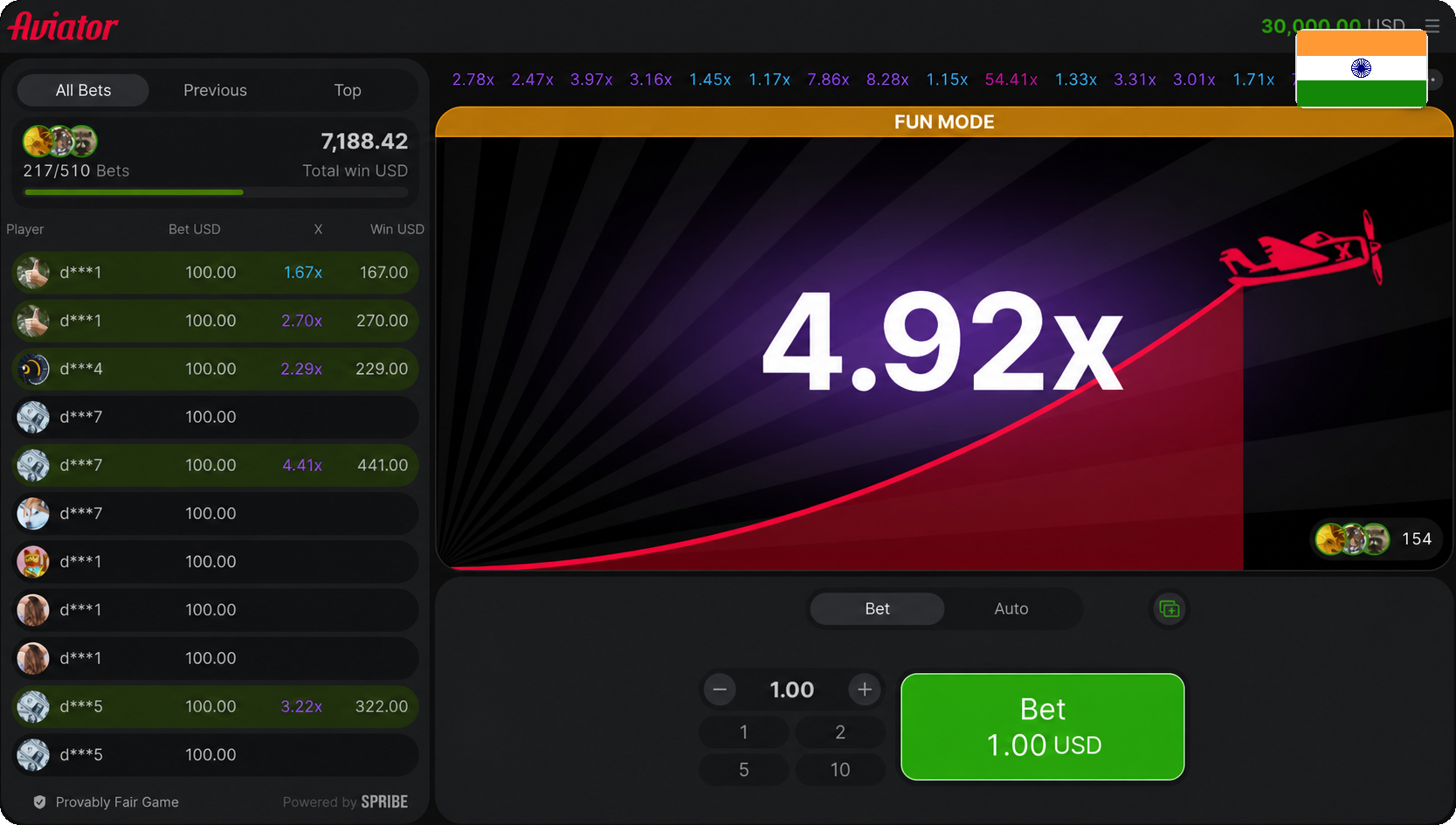
Short rounds make the game feel easy at first. They also create the main risk. Several bets can happen in a few minutes, and the amount on the bet slip can climb before the session has any structure. Start from the correct lobby. Set the amount before the countdown. Decide how cash out will be handled before the plane moves.
The practical way to start is direct. Open a casino lobby that offers Aviator. Test a few demo rounds if that option is available. Switch to a small real-money stake only after the screen feels familiar. The main Aviator guide explains the broader game concept for anyone comparing Aviator with other crash games.
Open the Game from the Casino Lobby
Aviator belongs inside the casino account. The screen should show the account balance beside the bet panel. A page that asks for a separate file before showing the lobby is a poor starting point for learning how to play Aviator game rounds.
For a first visit, the browser is enough. Open the casino and find Aviator in the game list. The download guide comes later, after the lobby has already worked once and faster repeat access becomes relevant.
That opening path prevents confusion later. The same account that holds the balance must also open the game. A clean lobby lets the player return to demo mode, check limits, or stop after a short session.
| Stage | What to do | Why it matters |
|---|---|---|
| Before the round | Open Aviator from the casino lobby | The game is tied to the correct account |
| First check | Try demo mode when available | The screen can be learned without pressure |
| First paid round | Use a small stake | The loss stays controlled if the round ends early |
| During play | Watch the multiplier and cash out | The result depends on leaving before the crash |
| After a few rounds | Stop or reset the stake | Fast rounds can push the player into rushed bets |
Order beats speed. A large first stake gives no advantage. Random files add risk before the game is even visible. One quick early win also proves nothing about the next round.
Understand the Round Before Betting
Each round starts when a stake is selected and the Aviator bet is confirmed before takeoff. Once the round begins, the multiplier rises from the base value. The round ends when the plane crashes. A bet pays only if cash out happens before that moment.
The cash out button is the main control. Pressing it locks the current multiplier for that bet. Waiting longer can increase the payout, but it also increases the chance of getting nothing from the round. That trade-off is the whole game.
Aviator feels different from slot games because there is an active decision during the round. The result is not just a spin that resolves on its own. Exit timing carries the weight, so discipline beats prediction.
The crash point is not visible before the round ends. No normal player can know the exact multiplier in advance. A working plan focuses on stake control and exit rules, not on guessing the next result.
Place the First Bet Correctly
The first bet should be small enough that the result cannot ruin the session plan. New players are still learning the screen speed, button timing, and rhythm of the multiplier. A modest amount leaves room to learn without turning every round into pressure.
Start with one bet panel if the game offers more than one. Some versions allow two bets in the same round. Use that feature only after the basic flow feels familiar. Two panels too early create extra decisions without extra control.
Set the stake before the countdown ends. If the bet is not accepted in time, wait for the next round instead of rushing. A missed round costs nothing. A rushed stake can break the limit for the session.
After the bet is accepted, keep the cash out target plain. A new player does not need a complicated system. Watch how the round behaves and how quickly the button responds.
Read the Screen Before the Countdown Ends
A clean first round starts before the plane takes off. The stake field needs to show the intended amount, not the previous value left from another test. The bet button also needs to confirm the action before the countdown ends. If the round starts while the button is still waiting, the bet was not placed and the correct move is to wait.
The balance line deserves a quick glance before every real-money round. It confirms that the account is active and that the stake fits the session budget. If the balance changes in a way that does not match the last result, stop and check the account history before placing another Aviator bet.
The cash out area deserves the same pre-round check as the stake field. Before a paid round, know where the button sits on the screen and how it looks after a bet is accepted. On a small mobile display, a half-second of searching can be enough to miss the chosen exit.
Auto cash out settings also need a pre-round check. If a target was used in demo mode, it may still be active when real-money play starts. That can be helpful when planned, but it creates confusion when forgotten. A quick look at the setting prevents a round from ending earlier or later than expected.
This habit sounds basic, but it separates controlled play from reaction play. The round itself moves quickly. The checks before takeoff are the quiet part of the game, and that is where the session stays organized.
Use Cash Out Without Chasing
Cash out is not a decoration on the screen. It is the only action that turns a rising multiplier into a settled result. Waiting for every round to reach a high number leads to more full losses.
A practical approach is to choose the exit idea before the round begins. An early exit gives a smaller payout but reduces pressure. A later exit needs a smaller stake because the bet will miss more often. Avoid changing the decision every second while the plane is already moving.
Manual cash out gives full control. It also requires attention. If the screen lags or the click comes late, the round can end before the action is accepted. That is why the first paid rounds need to stay small.
Auto cash out can reduce hesitation. The player sets a multiplier before the round, and the game attempts to leave automatically at that point. It does not guarantee a payout. If the crash happens first, the bet still loses.
| Cash out style | Best use | Main risk |
|---|---|---|
| Manual cash out | When the player wants direct control during the round | Hesitation can cost the bet |
| Auto cash out | When the player wants a fixed exit point | The round can crash before the target |
| Early exit | When protecting the session matters more than a high payout | The win amount stays smaller |
| Late exit | When the stake is small and the player accepts higher risk | Many rounds can end before payout |

Choose the cash out style from the session plan. A test session works better with plain exits. A higher target needs a lower stake first. Bet size and exit point must work together.
Practice in Demo Mode First
Aviator demo mode shows the pace of the game without using real money. It shows how fast the multiplier can move and how quickly a round can end. That experience is more valuable than a long explanation of the button.
Demo play should copy the habits planned for real-money play. Pick a stake size in advance. Choose an exit target before the round starts. Stop after a fixed number of rounds. Random clicking in demo mode teaches very little.
Demo mode also tests the device. If the button reacts late, postpone the real-money session. Cash out timing depends on a responsive screen.
Some casinos open free rounds from the same lobby used for paid play. When that option works, a separate Aviator demo account is not needed. A demo APK is also a weak learning route because the screen may not match the real casino lobby where the account balance and bet panel sit.
Demo results are not a forecast. A few successful free rounds do not prove that the next paid round will behave the same way. Demo mode teaches controls and timing. It does not remove the risk.
Real-Money Play Should Start Small
Real-money play starts only after the bet panel and cash out button are familiar. The first deposit should not become the first lesson. Screen layout should already make sense from demo mode or from a tiny paid round.
The login and registration guide covers account setup separately. For the playing session, keep the account ready before the game starts. Nobody should be fixing account problems while trying to follow a fast round.
The first session needs a fixed budget. That amount should be separate from the full account balance. When the session budget is gone, play stops. When the session target is reached, play can also stop. Both rules prevent the same problem: letting the next round make the decision.
| Session rule | Practical example | What it prevents |
|---|---|---|
| Set a budget first | Use only a small part of the balance | Losing more than planned |
| Keep the first stake low | Test several rounds before raising anything | One early crash damaging the session |
| Decide when to stop | End after a limit is reached | Chasing the previous result |
| Avoid instant stake jumps | Increase only after a break | Emotional betting after a win or loss |
| Use demo after problems | Return to free rounds when timing feels unclear | Paying for mistakes with real money |
These rules do not make Aviator predictable. They make the session easier to control. The game can still crash early, and a careful player can still lose a round. The point is to stop one bad round from becoming a bad session.
Build a Simple Aviator Game Strategy
An Aviator game strategy is a playing plan, not a promise of profit. The plan defines how much is used and when the session ends. Anything beyond that can become noise.
A conservative plan uses small stakes and earlier cash out decisions. It produces smaller wins when rounds pay, but it also reduces pressure. This fits new players because it teaches rhythm without forcing high-risk decisions.
A higher-risk plan uses smaller stakes with later exits. It can produce larger payouts when the round runs long, but many rounds can still end before the target. The stake must be lower because a losing streak can arrive quickly.
A mixed plan uses demo mode before real-money play. Timing is tested for a few rounds, then one fixed stake size is used for the paid session. If the amount changes after every result, the plan is already gone.
The biggest mistake is treating a strategy as a way to beat the game. Aviator is not solved by signals from previous rounds. The Aviator predictor guide covers those claims separately. For normal play, bankroll control does more work than prediction.
There is no Aviator winning strategy that makes the crash point predictable. A real plan controls only three things: bet size, exit decision, and stop point. That is enough to make play cleaner without pretending the game can be forced.
Common First-Player Mistakes
The first mistake is starting from a random app or file. The game should open from the casino lobby. If the account path is unclear, money management becomes harder before the round even starts.
The second mistake is raising the amount after one win. A strong round can make the game feel easy, but the next crash is independent from that feeling. Increase only when the session rule allows it.
The third mistake is chasing a recent loss. Aviator rounds are fast, so a player can try to recover immediately. That reaction often creates a larger loss than the original round.
The fourth mistake is waiting too long because the previous round went high. A high multiplier in one round does not force another high result. Each new round needs its own exit decision.
The fifth mistake is playing when the screen feels slow. If the button reacts late, cash out becomes harder. Stop or switch back to demo mode when the device or connection feels unreliable.
When to Stop Playing
Stopping is part of the game plan. Anyone who only decides when to start has no protection against fast losses. Set the stop rule before the first paid round.
One stop rule is based on loss. If the session budget is gone, the session ends. Adding money immediately turns a planned loss into a chase.
Another stop rule is based on profit. If the session reaches a target, locking the result can be better than trying to stretch play. Aviator can take back several small wins quickly when stakes rise.
A third stop rule is based on attention. If cash out is missed or the planned stake is forgotten, pause the session. The game is too fast for distracted play.
How to Choose a Place to Play
The best place to play is the one where Aviator opens cleanly and the account path is clear. Minimum stake should be visible before the first paid round. The cashier should be easy to reach before any deposit.
For India, the casino must accept the player’s location and payment method. If access depends on workarounds, the playing experience can become unstable before the game even starts.
There is no best time to play Aviator in India. The clock does not make the next round safer. A better question is whether the player has a stable screen, a working account, and enough focus to follow the planned cash out rule.
The Aviator review explains real-or-fake checks in more detail. A practical check is plain. The game opens, the account works, and the first stake stays under control.
Before real-money play
The best start is controlled, not dramatic.
Small stake
Fixed stop
FAQ
How do you play Aviator game?
Open Aviator from the casino lobby. Place a stake before the round starts and press cash out before the plane crashes. The payout depends on the multiplier at the moment the bet is cashed out.
Can I play Aviator in demo mode?
Yes, when the casino offers demo mode. Demo play shows button timing and round speed before real money is involved.
What is the best Aviator strategy for beginners?
The best beginner strategy is a clear session plan. Use a small stake, choose an exit idea before the round starts, and stop at a fixed budget or target.
Does cash out guarantee a win?
Cash out pays only if it happens before the crash. If the round ends first, the bet loses even when the target looked close.
Should I use auto cash out?
Auto cash out works for a fixed exit point. It reduces hesitation, but it does not protect the bet if the crash happens before the selected multiplier.
Can I win real money in Aviator?
Real-money play is possible when the casino supports paid rounds. The result is still risky, so the first stake should stay small.
Is Aviator demo the same as real play?
Demo mode teaches the controls and speed. Real play adds financial risk, so demo wins should not be treated as a forecast.
Can I play Aviator without downloading an app?
Yes. Many casino platforms let the player open Aviator in a mobile browser. Installation is only needed when it makes repeat access faster.
Are Aviator predictor tools useful?
No normal tool can show the next crash point with reliable control. A player is better served by stake limits and clear cash out rules.
What should I do before my first deposit?
Open Aviator in the lobby and test the controls first. Deposit only after the game route is clear and the minimum stake fits the session budget.